Don't invest unless you're prepared to lose all the money you invest. This is a high-risk investment and you are unlikely to be protected if something goes wrong. Take 2 mins to learn more.
Don't invest unless you're prepared to lose all the money you invest. This is a high-risk investment and you are unlikely to be protected if something goes wrong. .
Beating the 2026 IHT cliff edge: inheritance tax planning tips for high-net-worths
Syndicate Room
15 January 2026•6 min read
For over a decade, IHT planning was a predictable game of seven-year clocks and uncapped reliefs. That era ends this April. With the £325,000 Nil Rate Band frozen until 2030 and the introduction of new caps on Business Property Relief (BPR), "fiscal drag" is no longer a slow creep—it is a full-scale raid on middle-class and wealthy estates alike.
The inheritance tax burden in the UK reached £6.3 billion in the nine months to December 2024 alone, an increase of £600 million over the previous year. This trend is expected to continue, with the Office for Budget Responsibility (OBR) forecasting that annual IHT receipts will reach £9.1 billion by the 2025-26 tax year.
Here are the specialist tips for protecting your legacy in this new environment.
1. The "last chance" for uncapped gifting (Pre 6 April)
The most urgent tip for early 2026 is to recognise the anti-forestalling measures. While the new cap on 100% BPR applies to deaths after April 6th, gifts made now still benefit from current legislation if you survive the 7-year tail.
The specialist insight: If you intend to settle large amounts into trust or gift significant shares in a family business, doing so before the 5 April deadline is critical to locking in today's relief.
2. The "hidden" immediate relief: normal expenditure out of income
While most people are aware of the £3,000 annual gift allowance, sophisticated planners utilise Section 21 of the Inheritance Tax Act 1984. This allows you to make gifts of unlimited value that are exempt from IHT immediately, with no 7-year wait.
Criteria: To qualify, the gift must meet three strict statutory conditions:
It must be made from surplus income: This includes dividends, rental income, or pension drawdowns—but not capital (e.g., selling shares to gift the cash).
It must be "normal": You must establish a settled pattern of giving (HMRC typically looks for a 3-4 year history or a documented "letter of intent").
Standard of Living: You must be able to maintain your current lifestyle without needing to dip into your capital.
Some uses of the Normal Expenditure Out of Income include
Mortgage subsidies: Regular monthly payments to help family members clear debt.
Pension contributions: Funding a child’s SIPP to trigger extra government tax relief.
Trust funding: Making regular exempt "top-ups" to a family trust without triggering the 20% entry charge.
Note: Always keep a "Gifting Log." HMRC will ask your executors to fill out Form IHT403, which requires a year-by-year breakdown of your income vs. your living expenses to prove the gifts were truly "surplus."
3. Leverage the "two year speed advantage"
Standard estate planning relies on Potentially Exempt Transfers (PETs), which require you to survive seven years for the gift to leave your estate. In a volatile world, seven years is a high-risk timeline.
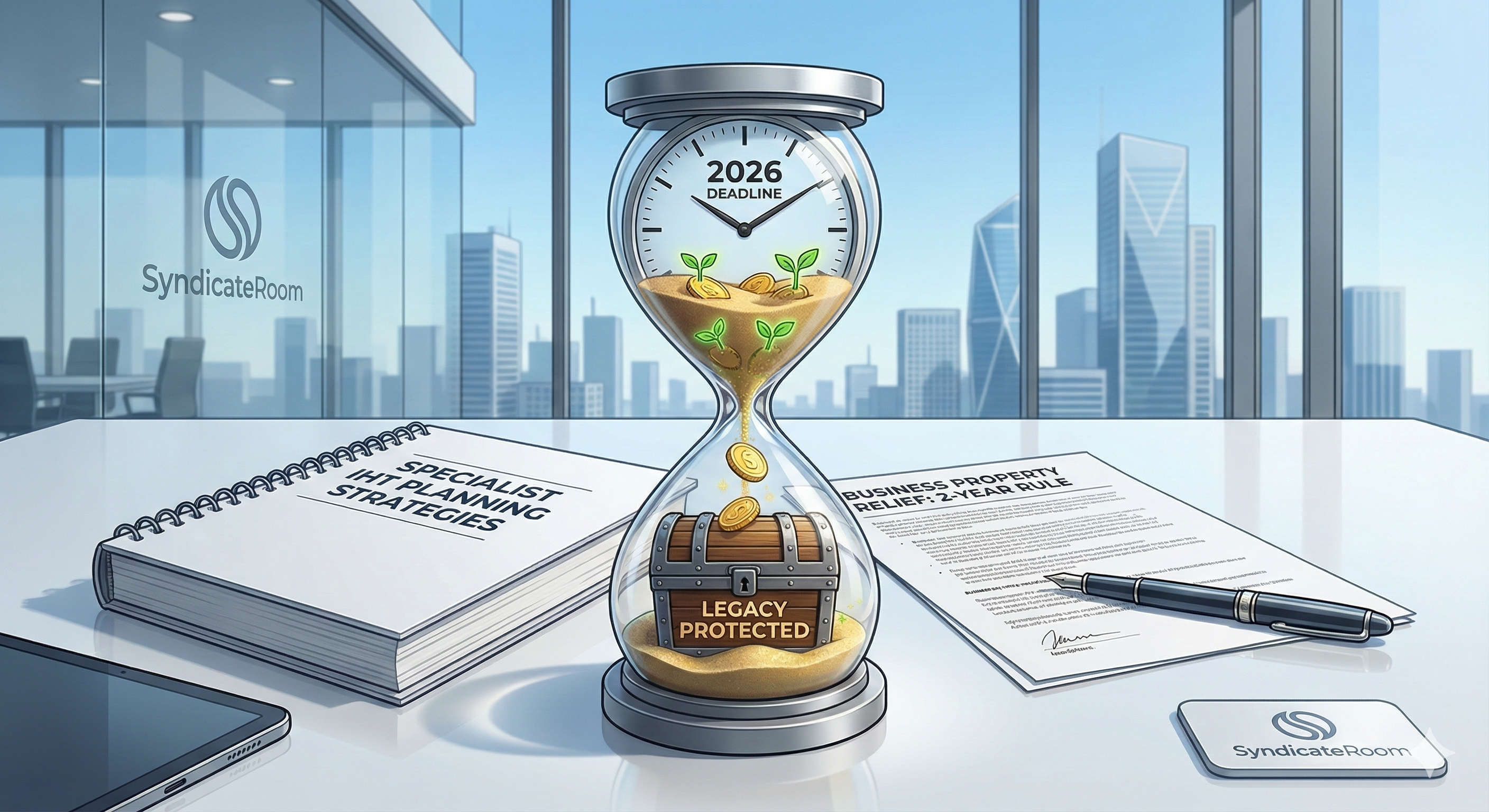
By contrast, investments in BPR-qualifying assets—such as those found in a diversifiedAccess EIS Fund—become 100% IHT exempt after just two years.
Though, as SyndicateRoom Partner Tom Britton notes, “BPR qualifying assets, including those our SEIS and EIS funds invest in, often come with a higher level of risk than traditional investments. While the tax reliefs are generous, one should only invest if they can afford to lose,”
Specialist take: Use BPR as your "fast-track" defence. For investors in their 70s or 80s, the 2-year holding period is statistically far more attractive than the 7-year wait for a gift to clear.
4. Pivot: diversified VC vs. the "AIM trap"
For years, the Alternative Investment Market (AIM) was the go-to for IHT relief. However, as of April 2026, AIM shares no longer qualify for 100% relief; they are now capped at 50% relief which equates to an effective 20% tax rate.
SyndicateRoom’s proprietary analysis of the UK startup market indicates strong growth potential for assets qualifying for Business Property Relief, with the market as a whole seeing consistent annual growth of approximately 25% to 31%. This high growth rate can help offset the inherent risks of venture capital while building a tax-efficient legacy.
The strategy shift: Sophisticated investors are moving away from the volatility of AIM and toward private equity/venture capital via the Enterprise Investment Scheme (EIS). Unlike AIM, qualifying unlisted startup shares still qualify for the full BPR allowance (within your cap), while offering significant income tax relief (30%) up front.
5. Comparison: traditional gifts vs. BPR investments
When planning for late-stage estate mitigation, the choice of vehicle determines your liquidity and risk:
It is worth noting that there is potential for high growth to balance BPR risk. This is evidenced by individual startup performance within EIS cohorts. For instance, Nivoda, an Access EIS 2020 cohort company, saw its share price increase by 1,162% by 2024. Further, the Access EIS 2020 and 2021 investment cohorts have demonstrated growth of over 40% as of April 2024. High-performing assets can preserve and grow an estate so long as the investors are willing to accept the potential risk and lengthy holding periods.
6. The 2027 pension warning: act now
The 2024 Budget confirmed that pensions will enter the IHT net in April 2027. For decades, the "specialist" advice was to spend your ISAs first and leave your pension untouched.
The new playbook: That advice is now inverted. You should work with an advisor to review your "decumulation" strategy. If your pension is now a taxable asset, it may be more tax-efficient to draw down the pension earlier and use those funds to feed BPR-qualifying investments, effectively "recycling" taxable pension wealth into IHT-exempt venture capital.
Summary: building a tax-efficient legacy
IHT planning in 2026 requires more than just "giving money away." It requires a blend of:
The Access EIS Fund allows you to build a portfolio of 30+ startups, providing the diversification necessary to use BPR effectively. With the April 5th deadline approaching, now is the time to move from education to execution.
Download your Access EIS Fund brochure
Read our fund brochure for everything you need to know about the Access EIS Fund, which includes a full explanation of our innovative co-investment model to our fees, and instructions on how to invest. Register to download the brochure.
Investing in early-stage businesses involves risks, including illiquidity, lack of dividends, loss of investment and dilution, and it should be done only as part of a diversified portfolio. Tax relief depends on an individual’s circumstances and may change in the future. In addition, the availability of tax relief depends on the company invested in maintaining its qualifying status. Past performance is not a reliable indicator of future performance. You should not rely on any past performance as a guarantee of future investment performance.
This page has been approved as a financial promotion by Syndicate Room Ltd, which is authorised and regulated by the Financial Conduct Authority (No. 613021).
We use cookies to improve our service. By continuing to use this site you are agreeing to their use. Find out more. .


.png)